

Staying Healthy During Pregnancy
Taking Care of You and Your Baby
Small, everyday choices help you and your baby thrive. Here's what our providers recommend for eating well, staying active and getting the rest you need. You'll also find guidance on healthy weight gain, prenatal vitamins and staying comfortable as you travel and work. Every pregnancy is different, so talk with your provider about what's right for you.
Healthy Weight Gain
Gaining weight during pregnancy is normal and healthy. How much you should gain depends on your body mass index (BMI) before pregnancy, and most of it happens in the second and third trimesters. Your provider will help you set a healthy goal. Call your provider's office if you gain more than five pounds in three days.
Underweight
BMI below 18.5
- Recommended gain: 28 to 40 pounds
- After the first trimester: about 1 to 1.3 pounds per week
Normal Weight
BMI 18.5 to 24.9
- Recommended gain: 25 to 35 pounds
- After the first trimester: about 0.8 to 1 pound per week
Overweight
BMI 25 to 29.9
- Recommended gain: 15 to 25 pounds
- After the first trimester: about 0.5 to 0.7 pounds per week
Obese
BMI 30 or higher
- Recommended gain: 11 to 20 pounds
- After the first trimester: about 0.4 to 0.6 pounds per week

Prenatal Vitamins
A daily prenatal vitamin with DHA, plus a healthy diet, gives you the nutrients you need. Buy one over the counter or ask us for a prescription.
- Folic acid: prevents birth defects of the brain and spine
- Iron: delivers oxygen to your baby and prevents anemia
- Calcium: builds your baby’s bones and teeth
- Vitamin D: builds bones and supports the immune system
- DHA: supports your baby’s brain development
- Vitamin B12: maintains the nervous system
Taking folic acid three months before pregnancy and during your first trimester can significantly lower the risk of birth defects. Some women need extra folic acid, and your provider will let you know if you do. If you’ve had bariatric surgery or have an iron deficiency, talk with your provider about other supplements.
Eating a Healthy Diet
Your prenatal vitamin covers most of your nutritional needs. Focus on a balanced diet from these food groups:
- Grains: Make half your grains whole grains, such as brown rice, oatmeal and whole wheat bread.
- Vegetables: Fill one-fourth of your plate with vegetables at each meal.
- Fruits: Fill one-fourth of your plate with fruit at each meal.
- Protein: Eat a variety of meat, poultry, fish, beans, eggs and nuts.
- Dairy: Choose pasteurized, fat-free or low-fat options.
Tell your provider if you follow a special diet. Vegetarians and vegans may need vitamin B12 and vitamin D supplements and should get enough protein from beans, lentils, nuts, tofu or whole grains.
Foods and Drinks to Avoid
During pregnancy, your immune system changes, and some foods and drinks carry a higher risk of illness that can affect you and your baby. Knowing what to limit or skip helps you make safe choices at every meal.
Raw or Undercooked Foods
- Raw or undercooked meat, poultry and seafood
- Raw eggs or foods made with them, such as some Caesar dressings, homemade mayonnaise and cookie dough
- Raw shellfish, such as oysters, clams and mussels
High-Mercury Fish
- Avoid shark, swordfish, king mackerel and tilefish
- Limit canned albacore (white) tuna to six ounces per week
- Other fish can be eaten twice a week
Unpasteurized Products
- Unpasteurized milk or juice
- Soft cheeses unless labeled pasteurized (Brie, Camembert, feta, queso blanco, queso fresco)
Other Foods to Avoid
- Refrigerated pâté or meat spreads
- Smoked seafood unless cooked in a casserole
- Unwashed fruits and vegetables
Caffeine
- Limit to 200 mg per day, about 12 ounces of coffee
Alcohol
There is no safe amount of alcohol during pregnancy. Avoid all beer, wine and liquor.
Artificial Sweeteners
- Avoid saccharin (Sweet’N Low, Necta Sweet)
- Other artificial sweeteners are safe in moderation, one to two servings per day
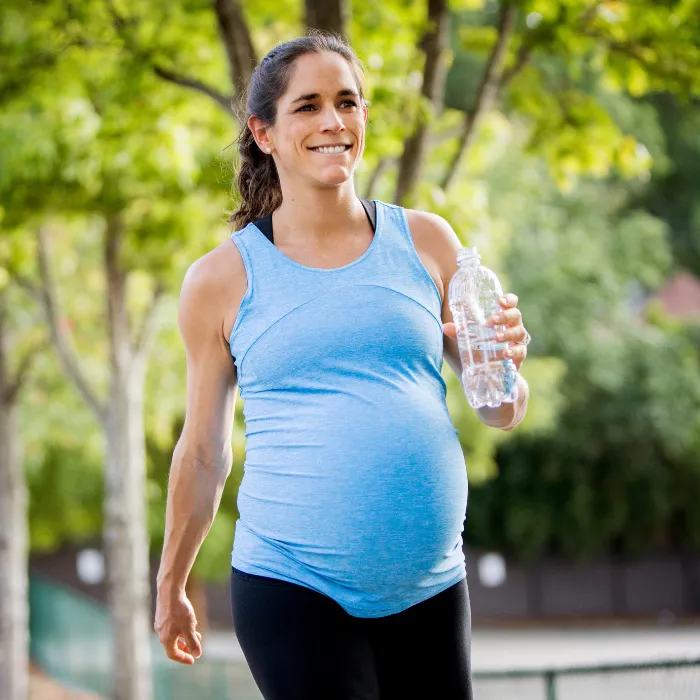
Staying Active
Staying active can help you feel better, sleep better and prepare your body for labor. Regular exercise is encouraged during pregnancy.
- Aim for 30 minutes of moderate exercise five times a week
- Weight training and toning exercises are safe
- You should be able to talk while exercising
- After 20 weeks, avoid exercises that require lying on your back
- Avoid activities with a high risk of falling or belly injury
Stop exercising and call your provider if you have:
- Excessive shortness of breath
- Irregular or rapid heartbeat
- Calf pain or trouble walking
- Vaginal bleeding
- Chest pain
- Regular contractions
- Decreased fetal movement
- Headache, dizziness or weakness
Sleep, Sex, Travel and Work
Helpful guidance for staying rested, comfortable and safe in your everyday routine.