
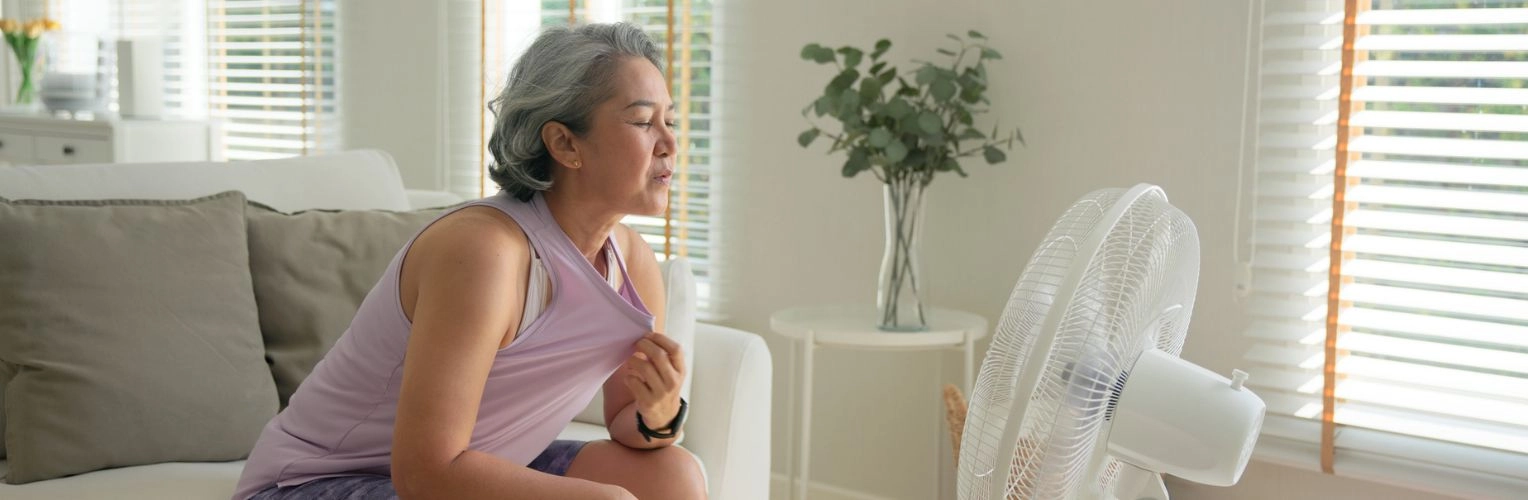
The Woman’s Guide to Hot Flashes: How to Recognize, Manage and Talk to Your Doctor
Have you ever experienced a sudden rush of warmth spreading across your face, neck and chest for no obvious reason? One minute you're fine, the next you're fanning yourself with whatever's nearby, while everyone else in the room seems perfectly comfortable. Hot flashes are one of the most common symptoms of perimenopause and menopause, affecting about 75 percent of women during their menopausal transition. While hot flashes can feel alarming at first, they are a normal part of the hormonal changes that occur as estrogen levels decline.
What Are Hot Flashes?
Hot flashes occur because the hypothalamus, the temperature regulating center of the brain, becomes more sensitive to slight changes in body temperature. When the brain falsely perceives the body is too warm, it triggers a rapid cooling response that dilates blood vessels near the skin and produces a wave of intense heat.
Recognizing the Signs
Hot flashes can feel different for every woman, but there are common signs to identify. Most women describe a sudden feeling of intense heat that washes over the upper body, often beginning in the chest or face. This warmth may be accompanied by flushing or redness of the skin, visible sweating and sometimes a rapid or irregular heartbeat. Many women also report a feeling of anxiety or unease just before a hot flash begins.
A typical hot flash lasts anywhere from one to five minutes, though some can extend longer. The frequency varies widely; some women experience just a few episodes per week, while others may have several in a single hour. After the heat passes, a cold chill can follow as the body attempts to reregulate its temperature. This swing from hot to cold will often leave you feeling drained, even after a brief episode.
It is important to remember that hot flashes do not look the same for everyone. Some women barely notice them, while others find them deeply disruptive. Age, body weight, stress levels, smoking history and even race and ethnicity can influence how frequently and how intensely a woman experiences them.
Are Hot Flashes Disrupting Your Sleep?
One of the most significant ways that hot flashes affect women is through sleep disruption. When hot flashes occur at night, they are commonly referred to as night sweats. You may wake up drenched in sweat, with your heart racing and feeling too warm to fall back asleep. You may kick off the covers, only to feel cold minutes later. Over time, this repeated cycle of waking can lead to chronic sleep deprivation.
Poor sleep caused by night sweats can ripple into every area of daily life. You may find yourself feeling more irritable, less focused or emotionally overwhelmed. These symptoms can sometimes be mistaken for mood disorders when, in fact, disrupted sleep from hot flashes is at the root of the problem. Memory lapses, fatigue and difficulty concentrating are all common complaints among women whose sleep is consistently interrupted by these nighttime episodes.
If you are lying awake night after night, soaking through your sheets and struggling to function the next day, it is important to recognize that this is not simply something you have to endure. There are real, effective options available, and you deserve to sleep well.
How Long Do Hot Flashes Last?
Many women assume that hot flashes are a brief inconvenience that will pass within a year or two. In reality, the timeline varies considerably. For some women, hot flashes last only a few years around menopause. For others, they can persist for a decade or more. Studies have found that the average duration of frequent hot flashes was 7.4 years. For women who began experiencing symptoms earlier or during perimenopause, before their periods stopped, the duration tended to be even longer.
Understanding that hot flashes may last years can encourage women to seek treatment early, rather than waiting and hoping they will simply disappear.
What Can Trigger a Hot Flash?
While hot flashes seem to strike without warning, certain triggers are commonly reported. Caffeine and alcohol are among the most frequently cited dietary culprits. Spicy foods, hot beverages and large meals can also provoke episodes. Stress and anxiety are significant triggers for many women, as is exposure to warm environments like a hot room, a heated car or even a warm shower.
Keeping a simple journal to track when your hot flashes occur, what you were doing beforehand and what you ate or drank can be a helpful step in identifying your personal triggers. This kind of record keeping also gives you valuable information to share with your health care provider.
Who Should You Talk To?
Your OB-GYN is your most important partner when it comes to managing hot flashes and the broader experience of menopause. Many women hesitate to bring up these symptoms, either because they feel embarrassed, or because they assume hot flashes are simply something to be accepted and pushed through. Your OB-GYN is trained specifically to help you navigate this stage of life, and there is no symptom too small or too personal to bring to that conversation.
During your appointment, your provider will likely ask about the frequency and severity of your hot flashes, how they are affecting your sleep and daily life, your personal and family medical history and any medications or supplements you are currently taking. Some treatment options include:
Hormone Therapy - Treatment options have expanded considerably in recent years. Hormone therapy, specifically low-dose estrogen, remains one of the most effective treatments available for hot flashes and is appropriate for many women, particularly those in early menopause without certain health risk factors. Your provider will discuss whether it is a good fit for you.
Non-hormonal Options - Non hormonal prescription medications are also available and have been shown to reduce the frequency and intensity of hot flashes significantly. These include certain antidepressants, gabapentin and a newer class of medication called neurokinin B receptor antagonists, which work directly on the brain's heat regulation pathway.
Lifestyle Modification - Beyond medication, lifestyle modifications can make a meaningful difference. Dressing in breathable, layered clothing, keeping a fan nearby, practicing stress-reduction techniques such as mindfulness or yoga and maintaining a healthy weight are all strategies that can help reduce the frequency and severity of episodes.
You Are Not Alone
Whether your hot flashes are a minor annoyance or they are significantly affecting your quality of life, your experience is valid and worth addressing. Health care is not just about treating illness. It is about helping you feel your best at every stage of life.
Ready to take the next step?
If hot flashes are affecting your sleep, your energy or your daily quality of life, you do not have to manage them alone. Our compassionate, experienced OB-GYN team is here to listen, evaluate your symptoms and work with you to find the relief you deserve. Find a trusted women's provider and schedule an appointment today to take the first step toward feeling like yourself again. Because every woman deserves to feel her best.